
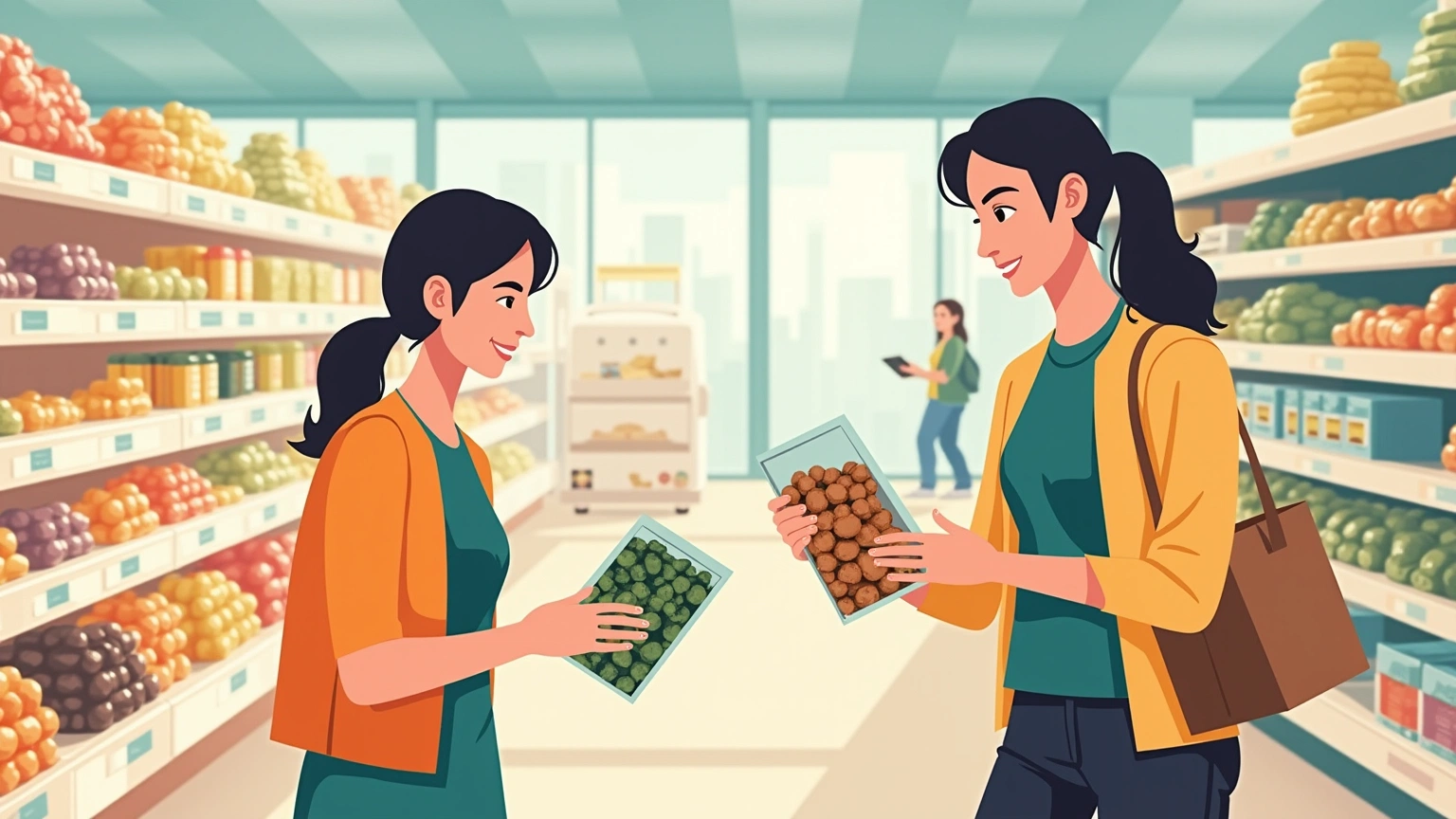
How To Read Ingredient Labels Fast at the Grocery Store
To read ingredient labels fast at the grocery store, start with three questions: what is this product supposed to do, what are the first few ingredients, and which of the two realistic options looks simpler for your goal. That gets you to a better decision much faster than trying to decode every line on the package.
Most grocery-store label stress comes from information overload. You are standing in an aisle, comparing similar products, with limited time and limited attention. A useful ingredient-reading workflow should help you spot what matters first, not make you feel like you need a chemistry degree to buy pasta sauce or yogurt.
That is where a tool like OkayDiet can help. An ingredient label scanner can surface patterns fast, but the bigger win is learning a repeatable process you can use even before you scan. If you want the broader beginner overview of what an ingredient scanner does well, read Ingredient Label Scanner: How Beginners Can Use One Well first.
What matters first on an ingredient label
When time is short, the best first move is not reading the entire list in panic mode. It is figuring out what deserves attention first.
Start with:
- the first three to five ingredients
- whether the ingredient list matches the product’s promise
- whether the product is noticeably more complicated than the alternative beside it
Those checks usually tell you more than obsessing over one unfamiliar additive in the middle of the label.
For example:
- if a plain yogurt is mostly milk and cultures, that fits the promise
- if a tomato sauce starts with tomatoes, oil, and seasonings, that usually feels clearer than one with a long string of extras
- if a “simple” granola bar reads like candy plus vitamin dusting, that gap is worth noticing
The question is not “Is this food perfect?” It is “Does this product make sense for what it is?”
A 30-second ingredient label workflow
If you want a fast routine you can actually use in store, use this one:
1. Start with the product category
Only compare like with like. Yogurt should be compared with yogurt. Protein bars with protein bars. Frozen meals with frozen meals.
That matters because ingredient complexity is category dependent. Bread and salsa are built differently. A “better” label is only meaningful when the products serve the same job.
2. Read the first few ingredients
The beginning of the list usually tells you what the product is mostly built from. You do not need the whole story before you know the basic character of the food.
Ask:
- does the base ingredient make sense for this product?
- are sugar, syrups, oils, or fillers showing up earlier than expected?
- does the product seem more engineered than I thought?
3. Look for the main tradeoff
Many grocery choices are not between “healthy” and “unhealthy.” They are between tradeoffs:
- simpler ingredient list vs lower price
- more convenience vs fewer extras
- higher protein vs more sweeteners
If you know the tradeoff, the label becomes easier to interpret.
4. Compare one realistic alternative
Do not compare the whole aisle. Compare the two or three products you might actually buy.
This is where ingredient scanners are strongest too. They help you notice which option is simpler, more aligned with your priorities, or easier to understand without turning the decision into an hour-long research project.
How to compare two labels quickly
A side-by-side comparison is usually more useful than trying to grade one label in isolation.
Here is a simple framework:
| Check | Question to ask |
|---|---|
| Base ingredients | What is the product mostly made from? |
| Length | Is one label much longer without a clear reason? |
| Match to promise | Does the ingredient list support the front-of-package story? |
| Extras | Are there added sweeteners, gums, colors, or flavorings you did not expect? |
| Fit for you | Does one option better match your priorities, budget, or convenience needs? |
This approach keeps you grounded in comparison instead of chasing abstract purity.
When an ingredient label scanner helps most
An ingredient label scanner is most useful when your eyes glaze over before your brain catches up.
That tends to happen with:
- protein bars
- flavored yogurt
- sauces and dressings
- frozen meals
- snack foods with marketing-heavy packaging
The scanner helps by making patterns visible faster. But the goal is still your judgment. A scanner can highlight that two crackers are close, or that one pasta sauce has a shorter list, or that a “high-protein” snack is also carrying a lot of sweetener. It should speed up attention, not replace decision-making.
Common mistakes that make label reading slower
Mistake 1: reading every ingredient with equal weight
Not every ingredient matters equally in a fast grocery decision. The first few ingredients usually deserve the most attention.
Mistake 2: reacting to one unfamiliar word
One long ingredient name does not automatically make a product worse. Sometimes the better question is whether the whole label is more complicated than you expected for that category.
Mistake 3: comparing products that solve different problems
A frozen breakfast sandwich and plain oats are not direct competitors. You will waste time if you compare them as if they should pass the same test.
Mistake 4: forgetting your actual shopping goal
Sometimes the right question is not “Which label is cleanest?” It is “Which option is good enough for this weeknight and still fits what I am trying to buy more often?”
A calm grocery-store routine you can repeat
If you want a repeatable system, use this:
- Pick the product category first.
- Scan or read the first few ingredients.
- Check whether the label matches the product’s promise.
- Compare one realistic alternative.
- Make the call and move on.
That last step matters. Better label reading should reduce friction, not create a new form of food anxiety.
Bottom line
To read ingredient labels fast at the grocery store, focus on what the product is supposed to be, what shows up first in the ingredient list, and how it compares with one realistic alternative. That gives you a useful answer much faster than trying to decode every line on the package.
An ingredient label scanner can make this process easier, but the bigger win is having a simple decision workflow. When you know what to look for first, grocery shopping gets calmer, faster, and more consistent.
Eat cleaner without decoding every label.
Scan an ingredient label, see what stands out, and make the clean eating call in seconds.